
Bienvenidos a la nueva puerta de entrada para las startups de tecnología agrícola. ¡Gracias, Plug and Play!
El equipo de WG Innovation desea ofrecer una nueva vía de acceso a las startups del sector AgTech que deseen ponerse en contacto con los miembros de Western Growers. Me complace anunciar el lanzamiento de la nueva página que han creado nuestros socios de Plug and Play:
Asociación Western Growers | Formulario de inscripción para startups
The Startup Intake Form is easy to complete. When you click through to the page, you press Start and it’s very similar to what you fill out when submitting an Accelerator or Incubator application process. This should not be a surprise because Plug and Play is one of the world’s largest Accelerators, and this is far from their first rodeo – just their most recent.
You enter your company name, your company URL, the region you are operating in, the year you launched your startup, how many full-time and part-time team members you have, total funding to date, annual revenue, the role of the main point of contact, your name, and your latest Pitch Deck or one-pager. Then you fill in your traction data – what segment you are in (automation, etc), what crop you are strongest in, what stage you are in (prototype, pilot, commercial or scaling), type of product you are selling (hardware, software, both, service), top value propositions for growers to consider your solution (labor solution, compliance solution, water efficiency solution), where you can deploy within 90 days (what region), what you need from Western Growers (introduction, pilot partner, or channel partner), and your biggest pilot dependency.
Next, you provide some data on your solution: how growers will justify buying your technology, your ROI / payback time (with data from growers), what stops adoption on farms (even with tech that works), how you approach commercialization, number of grower/shipper interviews you’ve done in the last 6 months, and you’re done. The whole process should take 5-10 minutes. The page says five. That might be optimistic, but I completed it twice and didn’t rush, and ten minutes is definitely a fair expectation. This is particularly true if you’re a founder who knows your startup and your metrics (which are certainly most or all of you).
So why did we launch this process with Plug and Play? It’s simple. We needed a way to scale the front door to grower conversations for startups in our two key areas – labor challenges (and automation provides the best and most scalable solutions) and chemical input challenges (and the portfolio of bio-controls, genetics, and regenerative agriculture practices provide the best alternatives to pesticides that are increasingly under pressure of having usage limits or outright bans from both state and federal regulators as well as retail buyers). Our friends at Mixing Bowl identified over 700 automation startups two years ago, and there have been additional startups funded since then. In biologicals alone, they have identified 1,300 funded startups with over 400 in the bio-controls segment in 2025 (and as with automation more have received funding since the Landscape was published). To be clear, these are the ones that earned a spot on the Crop Robotics Landscape, Biologicals Landscape, and Bio-Controls Landscape after some vetting work by Mixing Bowl. There are more startups. This is just the relative short list to focus on.
We have 2,000 startups, and increasingly they are all over the globe. Well, Ben Palone and I are only two people, and we have some budget and time constraints that prevent us from going all over the world to do scouting activity. In fact, we have plenty to do right here in California and the western region of the US. So how do you take the 700 automation startups plus the additional ones that got funding and the 1,300 biological startups (and additional ones that got funding) and manage the 2,000+ startups into an innovation funnel that winnows itself down to a manageable count of “commercial ready” or more importantly “grower economics ready” prospects?
First, you look at the potential players that could help with global scouting activity. There are several Accelerators that get hundreds of applicants for AgTech and AgriFoodTech programs. There are Accelerators that focus on early stage technology efforts in key tech segments like AI, fintech, and mobile apps. Then we looked at a Venn diagram of the overlap between those two groups, and things thinned out pretty quickly (just like you would expect with a quality thinning robot – see what I did there?) We were looking for a partner with a global footprint that could help us scout startups all over the world and interact with the WG team and WG members regularly about what and who they’re seeing with a good understanding of grower needs and how well they are being met as related to the quality of solutions they are evaluating.
Once we reviewed the choices, it was pretty clear that Plug and Play provided a unique combination of global capabilities and a solid understanding of grower challenges and evaluating potential solutions. With that in mind, we signed a three-year partnership with them last year focused on automation scouting globally as a key deliverable. The first step was opening up communications between Plug and Play and WG membership. This effort began in earnest at the WG Annual Meeting last November, which four members of the Plug and Play team were able to attend. The next step was to build the landing page at the URL above and begin promoting it. Startups should see this as the first step in a multi-step funnel toward engaging with WG members.
We (the WG Innovation team) think this is a big step forward for startups, for Plug and Play, and for Western Growers. Startups now have a clear starting point because Ben and I were getting somewhat overwhelmed by the volume of in-bound conversations, and it forced us to do less travel and scouting. Every early stage startup conversation we had took time away from one of our big focus areas: helping startups that are already at midfield get into the red zone and ideally into the end zone (i.e. commercial success at a scale that achieves cash flow positive status. At this point, the startup’s future is much more secure and they do not need to raise additional capital). In a capital constrained environment, helping later stage companies get to commercial scale needs to be a priority to maximize the chances of developing more automation solutions. But early stage startups need help too – in many cases even more than later stage startups until they are able to achieve the highly desirable product-market fit where the value proposition hits the grower right where they are and at grower economics that allow the grower to buy the solution and deliver an ROI timeframe of less than two years. Ben and I were barely bringing a knife to a gun fight.
So back to the form – submit your information via the form and the Plug and Play team will review the information, and in many cases, will confirm key data points during their evaluation. Then the rest of the funnel starts to take shape. And before we go any further, we want to recommend and highly encourage the founder (or co-founder) or CEO (and ideally and often those are the same person) complete the data because you should have the most comprehensive picture of the information needed to complete the form. Don’t leave that to someone else. Once you are vetted, Plug and Play will work with Ben and me to determine the right set of scouted startups to put in front of WG membership in a webinar (i.e. yep, another Zoom call for growers!).
The webinars will likely be quarterly, and the first few will focus heavily on automation solutions. The Plug and Play team will present an overview of each solution in terms of the product (the tech), the team (with particular focus on ownership of the revenue target and the product roadmap – the two functions that matter the most for AgTech startups), and the go-to market strategy (which markets are they in, what are the plans for US market entry for international startups). The evaluation is about a lot more than just the R&D work to get to a first version of the product. Technology Readiness Level (TRL) is a common metric cited as a measurement of product capabilities, but it is only part of the entire package that needs to work with grower organizations. And for AgTech, it is always worth mentioning that the all-important last mile is the actual integration of the solution into the grower operations team and the integration of a new robot into a farming operation team is one of the more complex integrations out there because it requires both the tech and the teams to get integrated in a way that delivers the targeted economic results and ROI.
I’ve worked in startups in e-commerce, search marketing, and enterprise data centers. AgTech has by a fairly wide margin the most complex requirements for successful and sustainable integration because it has the largest set of (literally) outside-the-building risks relative to the ones I mentioned above. Startups need to invest in it to be successful, and Plug and Play will be looking to evaluate the integration capabilities.
Those are the first couple of steps startups should take. Submit the form to get into Plug and Play’s evaluation list. Then once you are evaluated by Plug and Play, the vetted solutions will get presented to WG members via multiple channels (in addition to the webinar, we will promote the vetted startups in both WG Member publications and emails to raise awareness of them among WG members). Our goal is to put vetted startups in front of members on a regular basis through channels they already use to create as many opportunities as possible for grower-startup conversations with vetted startups. It is important to remember that the WG Innovation team does not own your startup’s revenue number, but we are happy to help tee up funnel opportunities when it makes sense. Usually, one time where it makes a lot of sense is after the vetting process. We are doing things this way to really provide an incentive for every startup to complete the form. That puts everyone on a level playing field and lets Plug and Play review all of them during vetting.
We will provide more details of the rest of the engagement points on the way to a very happy day for some startups. That day is when you’ve gone through a Reservoir Farms membership (or something like it) and technology evaluation (which is different than Plug and Plays evaluation for reasons that will become obvious once we define it in a future article) or something comparable, completed numerous field demonstrations and field trials, and finally earned the right to be published in a Western Growers Case Study with detailed grower economics and an Economic Template so other growers can do their own math of how the solution economics work for them (different farmers use different equipment ownership/leasing processes, different labor types – H-2A v domestic, and different employment options – through a farm labor contractor (FLC) or direct hire; together all of these factors can make the ROI math very different for two growers of similar crop sets). But all of that is a topic and an article for a different day. For now, we would like to invite folks to share the form widely and make sure the startups they are working with, investing in, and supporting all know that there is a new front door to WG members, and it’s available for everyone!
Más información sobre la próxima generación de trabajadores de AG
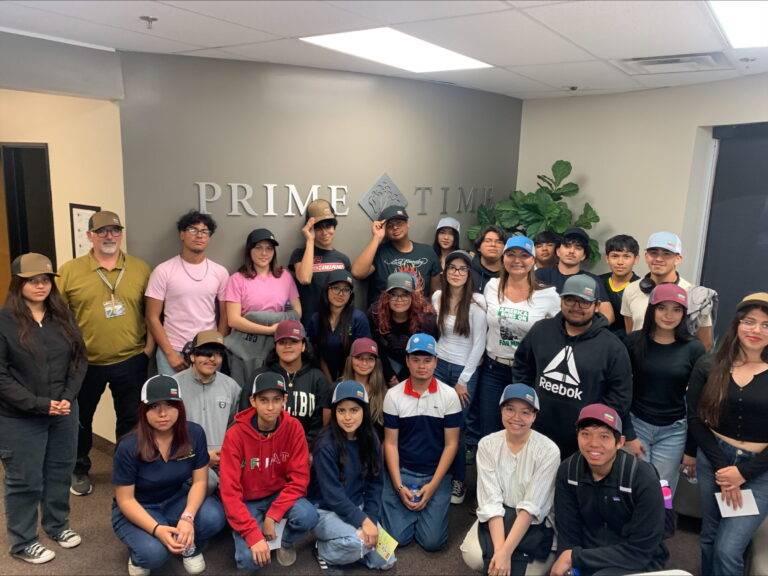
Western Growers y California Women for Agriculture Coachella Valley Chapter organizan una gira de carreras agrícolas para estudiantes
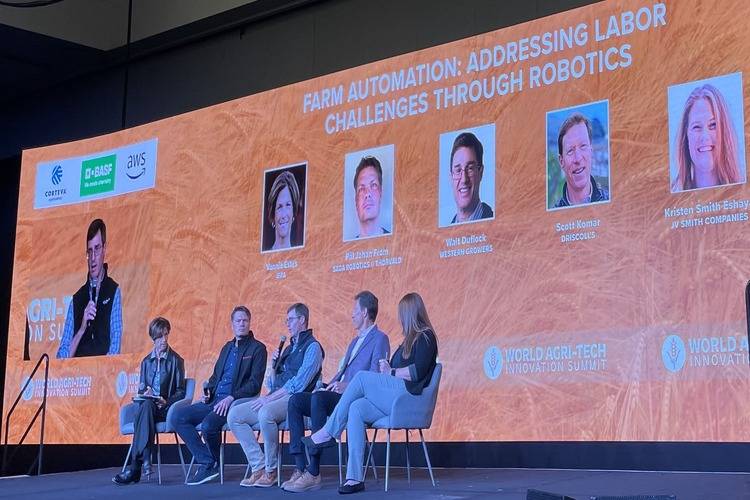
Walt Duflock, de WG, participa en el panel sobre automatización agrícola de la Cumbre Mundial de Tecnología Agrícola de San Francisco

FARMX: Revolucionando la agricultura
Walt Duflock habla del futuro de la agricultura californiana con The Modern Acre Podcast
