
Helping Elected Officials Understand Specialty Crops and AgTech
I wanted to share some of the recent activity in the Western Growers Center for Innovation and Technology (WGCIT) and at our partners at Reservoir Farms. Both are great locations for meeting with elected officials for the same reason. We have several prominent growers and WG Board members within a short drive of both, which makes it easy for us to get our members involved in the conversations. In addition, we have many AgTech startups that are regularly in Salinas Valley because that’s either their headquarters or it’s their US headquarters if they’re based internationally. Access to startups and growers makes for productive conversations with elected officials because they are literally where the rubber meets the road (or more accurately where the robots and biologicals meet the fields and plants).
These conversations are increasingly growing in importance for both groups. Growers continue to ask for a slow-down in the regulatory onslaught they are subjected to on a regular and ongoing basis. Cal Poly has done the research – the cost in 2024 for specialty crop growers was $1,600 per acre per year for California leafy green growers, and it’s always worth remembering that all of those dollars do nothing to contribute to margin. All those regulatory costs do is add to the complexity and cost of farming operations statewide. A big part of the conversations is just reminding people what the current regulations already cost farmers and what new regulations would likely add. The other big part is bringing ideas around innovation where elected officials, administrators, and candidates can better understand the innovation priorities growers would like so that the growers mindset is at the table as policy decisions are made. What they say in politics is often true – if you’re not at the table, you’re on the menu. We prefer it if agriculture and AgTech are at the table, and these conversations help make that happen.
You’ll see below that we have three examples of meetings that are pretty standard in this space. First, there was a meeting with a member of Congress’ staffer. The key messages centered around labor challenges and automation opportunities. Second, there was a meeting with an administrator from the Occupational Safety and Health Administration (OSHA). The same topics were the focus of this conversation, with particular emphasis on the likely positive impacts of some rule changes to allow autonomous vehicles to operate on farms. Third, there was a meeting with a California gubernatorial candidate. Similar topics were the focus of this conversation, with a particular emphasis on the “things you are likely to consider” question coming up multiple times. At the very least, each meeting gave WG members and startups a chance to make their case for the help they could use. Below are some of the high points that came out of the meetings.
Meeting with Representative Zoe Lofgren’s Staffer
In February, the WG Innovation team met with a staffer from Representative Zoe Lofgren’s district to share an update on how specialty crops in California are doing, the challenges they face, and what would help make things better for them. For those who do not know Representative Lofgren, she’s been a long-time California Representative in Congress and now represents the redesigned California 18th District, which includes the 101 corridor that goes through the length of the Salinas Valley from Santa Clara down to almost Paso Robles. Representative Lofgren’s district includes one of the largest specialty crop regions and some of the largest WG member organizations. This was previously Representative Jimmy Panetta’s District, but when it was required that California redistrict, it got switched into Representative Lofgren’s District. So any time we can spend time with her staff to get her engaged with the ag and AgTech in her district, we are glad to get the opportunity.
The WG Innovation team’s discussions with staffers routinely focuses on labor and automation issues, particularly the large number of labor hours needed for CA specialty crops (850M hours in 2024 at a cost of $16.3B), the breakdown of those hours (2/3 for harvest; 1/3 for everything else), and the nuances of that labor force (10% is H-2A immigrant labor, which pushes the hourly rate to $28-30/hour when fully loaded with transportation, housing, and food costs). Then we discuss the potential for automation to meaningfully impact the labor dynamics, including progress in non-harvest and harvest automation solutions. Finally, we like to discuss where we could collaborate to improve things – often with public capital working together with private capital from industry and investors to try and push automation into commercialization faster and more effectively.
Industry Conversation with Deputy Assistant Secretary for Occupational Safety and Health Amanda Wood Laihow
Also in February, we worked with Hannah Johnson to put an industry group conversation together for Deputy Assistant Secretary for Occupational Safety and Health Amanda Wood Laihow. This was a great conversation, with participation from Taylor Farms, D’Arrigo Brothers, Missionero, and Nature’s Reward. The grower dialogue covered many of the same topics as the summary above with Representative Lofgren’s staffer. The difference is that it is always more impactful when the WG membership gets engaged. That’s why it was so great to see four of our members making the effort to come by the WGCIT and engage with Secretary Laihow. As strong as the WG Innovation team can be for advocacy work on behalf of ag and AgTech, there’s a gear that the WG members have that make the data and anecdotes they provide even more impactful because they are the ones doing the hard work every day. Big thanks to Hannah Johnson and Emily Lyons for coordinating a great conversation.
After the WGCIT visit, we also coordinated with Hannah Johnson on a visit to the AgSafe event to an AgTech Alchemy Happy Hour event where Secretary Laihow was able to get first-hand feedback directly from multiple AgTech startups on some of their challenges, including the lack of investment capital and the reality that if growers are facing economic challenges due to tough market conditions and higher input costs, it’s safe to assume it’s also tough in AgTech startup land because if growers are short of capital, guess what they’re not buying as much of these days? Yep, that would be AgTech. The startups did a great job of articulating their challenges, which are clearly related to the overall ag challenges but noticeably different in terms of what is needed.
California Gubernatorial Candidate (and former LA Mayor) Antonio Villariagosa
In March, Salinas had a visit from California Gubernatorial Candidate (and former LA Mayor) Antonio Villariagosa. We met Candidate Villaraigosa at Reservoir Farms, which we consider to be an alternate meeting spot to WGCIT (and conveniently Reservoir and their member startups see the WGCIT as an alternate meeting space as well). The benefit of being at Reservoir Farms is you can provide a field tour so that Representatives (and others) can get a first-hand look at the fields and the quality of the growing operation when it is run by our members that partner with Reservoir Farms to deliver commercial quality growing operations – Naturipe Farms and Tanimua & Antle. We strongly believe that getting candidates and elected officials into the dirt and into the shop where AgTech is being invented is the best way to convince them that ag and AgTech are both great opportunities and significant challenges. The benefits of being in person and seeing the great berries and leafy greens at Reservoir Farms remind everyone that agriculture is harder than it looks and it takes a lot of hands to make the magic happen.
Candidate Villariagosa gave us almost two hours as he toured the acreage at Reservoir Farms, the R&D facility that looked modern as a 100-year-old Tamagni Ranch barn was turned into a very up-to-date R&D location for what is now 15 member startups. After the farm and barn tour, we got to share why Western Growers and John Deere are so deeply engaged with the Reservoir Farms team. The short version is we need to help startups get to a Product 1.0 status faster and cheaper and Reservoir Farms helps by providing shared acreage, shared equipment, shared R&D space, and shared meeting space at both Reservoir Farms and WGCIT. Candidate Villariagosa has a deep understanding of the opportunities and challenges of today’s agriculture industry and came away impressed by the work being done by growers and startups every day. We covered a range of topics with D’Arrigo Brothers and Rincon Farms leaders. As always, they were candid and brought the cost data on some of their challenges. WG members, particularly the ones we bring into conversations with elected officials, are always great about having the economics top of mind and being able to share them with the right context for elected officials. And in most cases, they’ve got suggestions on what could make things better for their organizations.
So, there’s a summary of three recent activities with elected officials and candidates, all about a mile apart between the WGCIT and Reservoir Farms locations. I believe all three helped the politicians better understand today’s set of farming challenges and where and how they can help. It takes a village to keep California agriculture well supported, and the WG Innovation team and our members are happy to be part of and do their part for the village. These three visits are great examples of what that looks like when we get it right. Providing lots of data and specific numbers whenever possible goes a long way toward getting the numbers and data to stick and be remembered.
More about Next Gen AG Workers
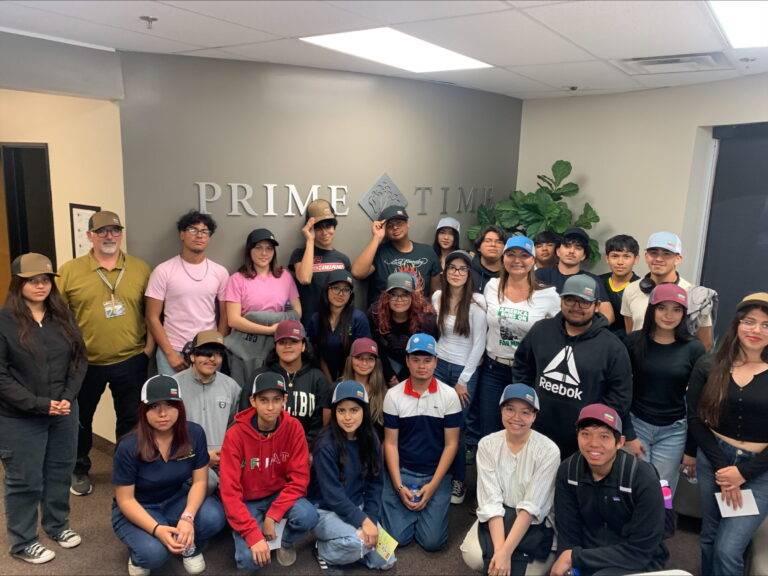
Western Growers and the California Women for Agriculture Coachella Valley Chapter Host Student Ag Careers Tour
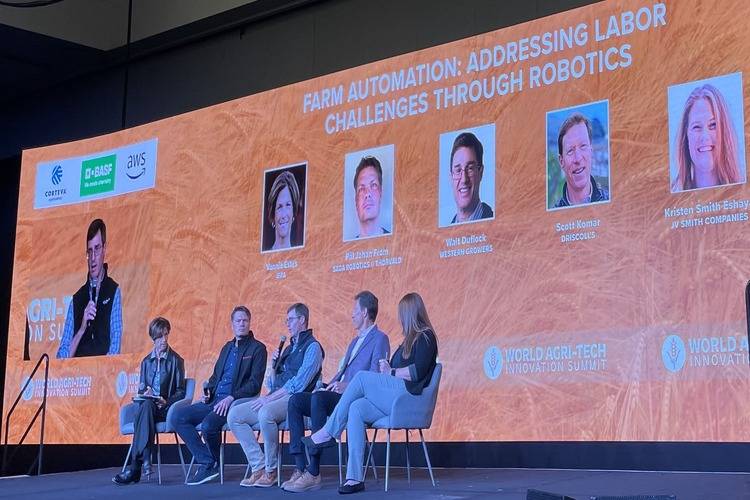
WG’s Walt Duflock Joins Farm Automation Panel at World Agri-Tech Summit in San Francisco
FARMX: Revolutionizing Agriculture

Walt Duflock Talks the Future of California Ag with The Modern Acre Podcast
