
Showing Up for the Specialty Crop Industry at the 102nd Annual Agricultural Outlook Forum
Last week, I had the privilege of attending the 102nd annual Agricultural Outlook Forum in Washington, D.C., marking not only my first experience at this long-standing national event but also my very first visit to our nation’s capital. The Forum brought together agriculture leaders, policymakers, innovators, and growers from across the country—yet even amid its impressive scale, it offered valuable reminders of where specialty crops stand today and where they must go next.
One of my immediate observations was how specialty crops remain significantly underrepresented in national level discussions. While the Forum covered a wide range of topics, the dominant focus consistently returned to corn, soybeans, and protein production. These sectors are undeniably critical to U.S. agriculture, but the imbalance highlights an ongoing challenge: specialty crops continue to be treated as an afterthought rather than a cornerstone of American food and farm policy. As labor challenges grow and production realities evolve, it is increasingly important that specialty crops receive the attention and resources they deserve.
Despite this gap, several sessions offered meaningful insights. I was particularly glad to attend the panel discussion titled “Improving Nutrition for a Healthier America.” USDA leaders emphasized the importance of encouraging Americans to eat whole, healthy foods—a message closely aligned with the role our growers play in providing the fruits, nuts, and vegetables that support healthier diets. The conversation spanned nutrition security, equitable food access, and the need to integrate more fresh produce into federal nutrition programs. Hearing national leaders champion whole food nutrition reinforced how essential our industry is to public health outcomes.
On the second day of the conference, Secretary of Agriculture Brooke Rollins delivered a forward-looking assessment of the farm economy, emphasizing the agency’s commitment to strengthening producer support and expanding U.S. agricultural exports. Rollins highlighted USDA’s continued focus on bolstering trade performance and underscored key priorities within the emerging farm bill framework. She stressed that supporting farmers through volatile markets remains central to USDA policy, noting the importance of improved data accuracy, enhanced safety net programs, and strategic updates to farm support mechanisms. Rollins’ remarks set the tone for the Forum’s broader discussions on commodity outlooks, market conditions, and the path ahead for U.S. agriculture.
Another highlight came when Walt Duflock, Danny Bernstein, and I were invited to participate in the panel, “From Silicon Valley to the Farm—Driving Innovation Through Agriculture Technology.” This session brought together voices from across the innovation ecosystem to explore how technology is reshaping modern agriculture. It was an honor to represent our growers and share how Western Growers members are leading the way in practical, field ready innovation.
During my portion of the discussion, I focused on the real-world innovations specialty crop growers are already deploying—particularly solutions designed to combat labor scarcity, input resistance, and rising input costs. From advanced automation and robotics to precision tools and emerging biological inputs, specialty crop producers are not waiting for the future to arrive; they are actively building it. I highlighted how these solutions deliver value today, while also positioning growers for long term resilience in a rapidly changing regulatory and economic environment.
What stood out throughout the Forum was a growing national interest in agricultural innovation—yet also a clear opportunity to bring specialty crops more fully into the center of that conversation. Our growers operate some of the most labor intensive, technologically challenging, and economically significant production systems in the country. Their stories, needs, and innovations deserve a stronger platform at future federal and national gatherings.
Overall, the Agricultural Outlook Forum was a valuable and memorable experience. It offered fresh perspective, important connections, and a chance to spotlight the incredible work being done across our specialty crop community. As I left Washington, I felt both grateful for the opportunity to participate and motivated to ensure that specialty crops play a larger, more visible role at next year’s Forum.
I’m already looking forward to returning—and to continuing the work of bringing specialty crop challenges, innovations, and opportunities front and center in national agriculture conversations.
More about Next Gen AG Workers
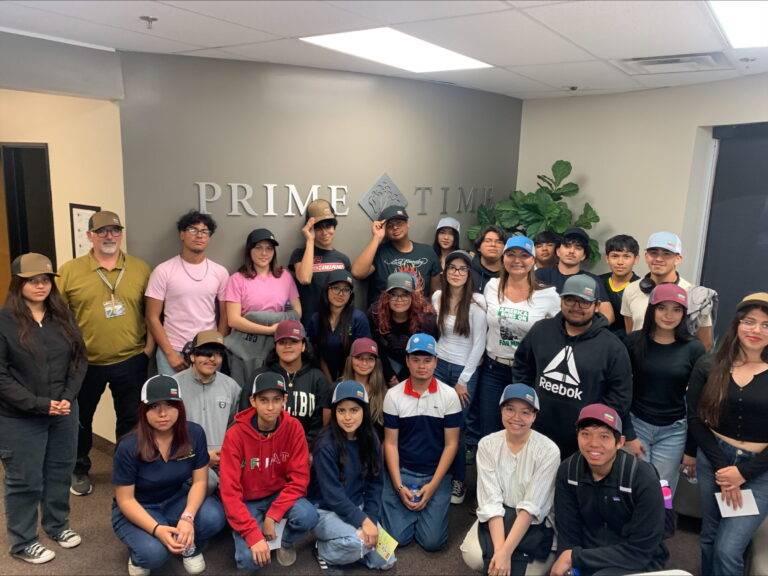
Western Growers and the California Women for Agriculture Coachella Valley Chapter Host Student Ag Careers Tour
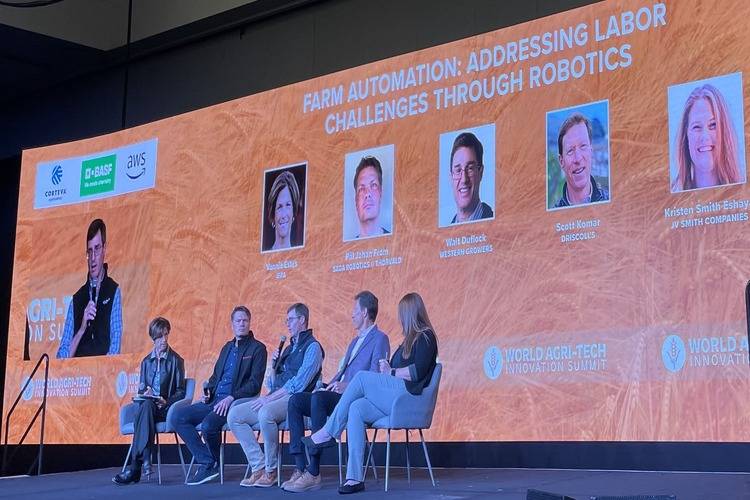
WG’s Walt Duflock Joins Farm Automation Panel at World Agri-Tech Summit in San Francisco
FARMX: Revolutionizing Agriculture
Walt Duflock Talks the Future of California Ag with The Modern Acre Podcast
